

the RECORDING
Album history and recording location
The double album, released in 2009 with the catalog number KVCD-003, was recorded at the Roman Catholic Cathedral in Moscow — the largest Catholic church in Russia.
The organ is the main pride of the cathedral: an instrument built by the Swiss firm Th. Kuhn, one of the largest in Russia. It was gifted to the cathedral in 2001 by the Basel Minster, where it was previously located.
Due to the cathedral’s central location, to avoid street noise and vibrations from passing subway trains, organist Konstantin Volostnov made the recording over the course of three nights.
the IDEA
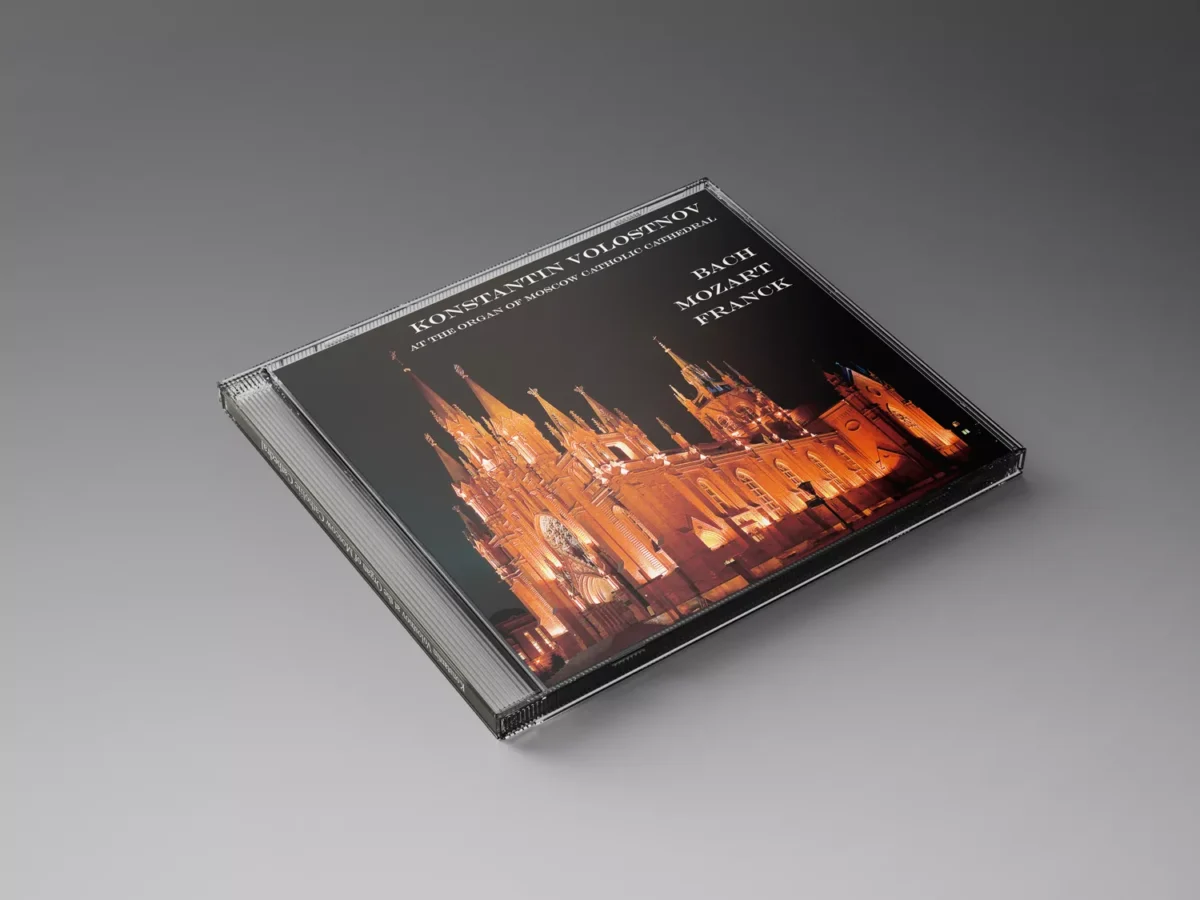
Monumental simplicity
The edition’s design is executed in the conservative style of the late 2000s, typical of classical music releases.
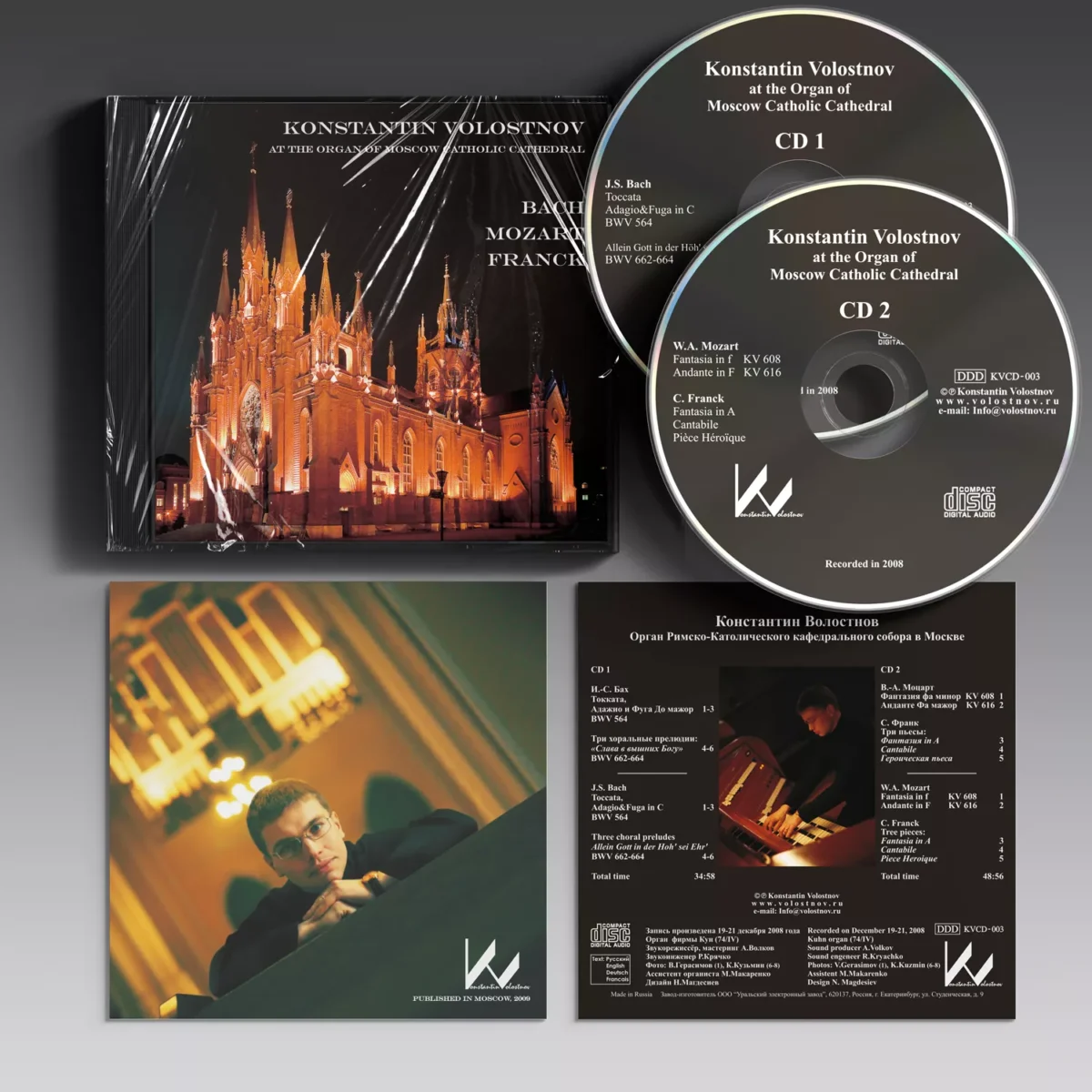
On the cover, a photo of the cathedral with aggressive illumination of the Gothic facade against the night sky sets a solemn, slightly mystical mood — the building seems to glow from within.
Architecture dominates over the soloist, which is typical for organ releases — the instrument and location here sell the recording on par with the performer’s name.
the FOCUS
In the spotlight
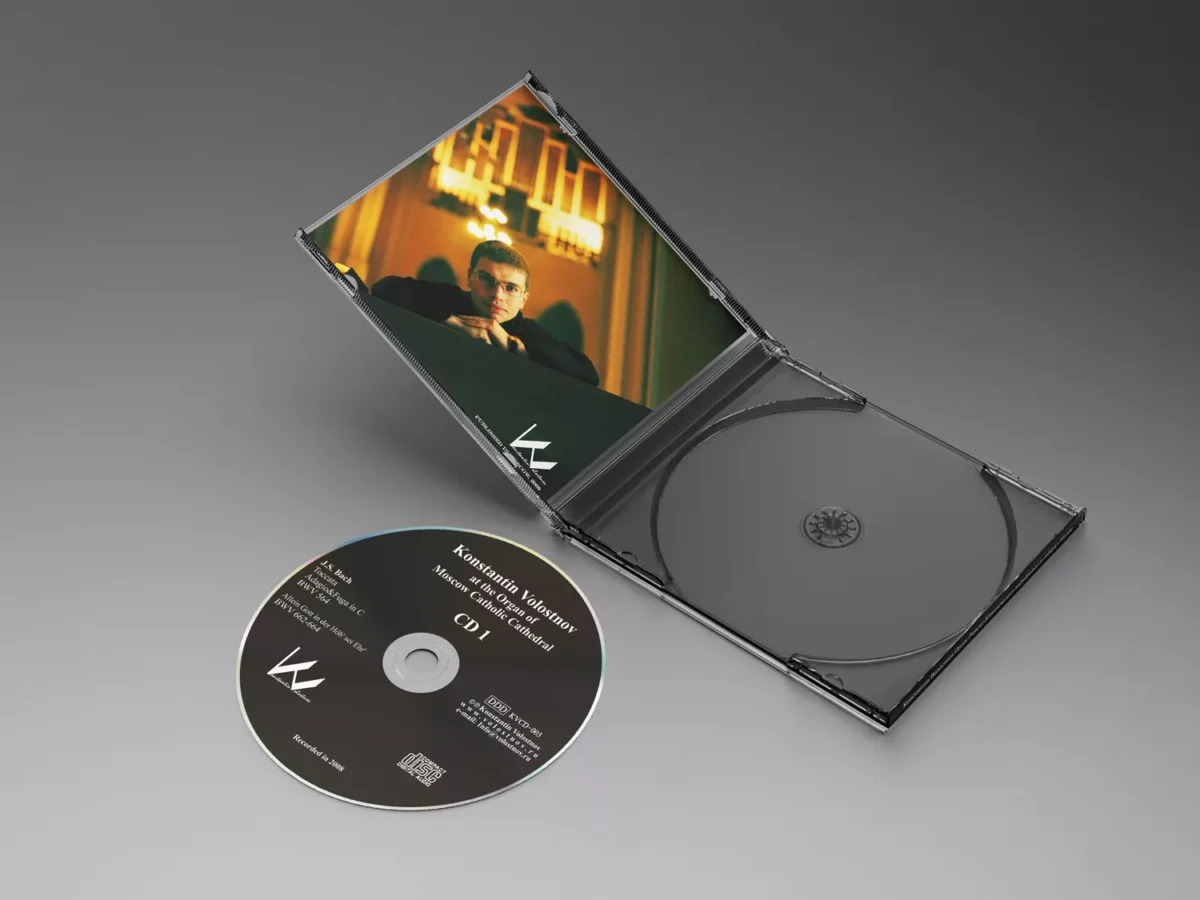
The inner inlay is built on a “Dutch angle” (intentional horizon tilt) with warm color grading. This adds dynamics to the portrait and contrasts with the static architecture of the cover.
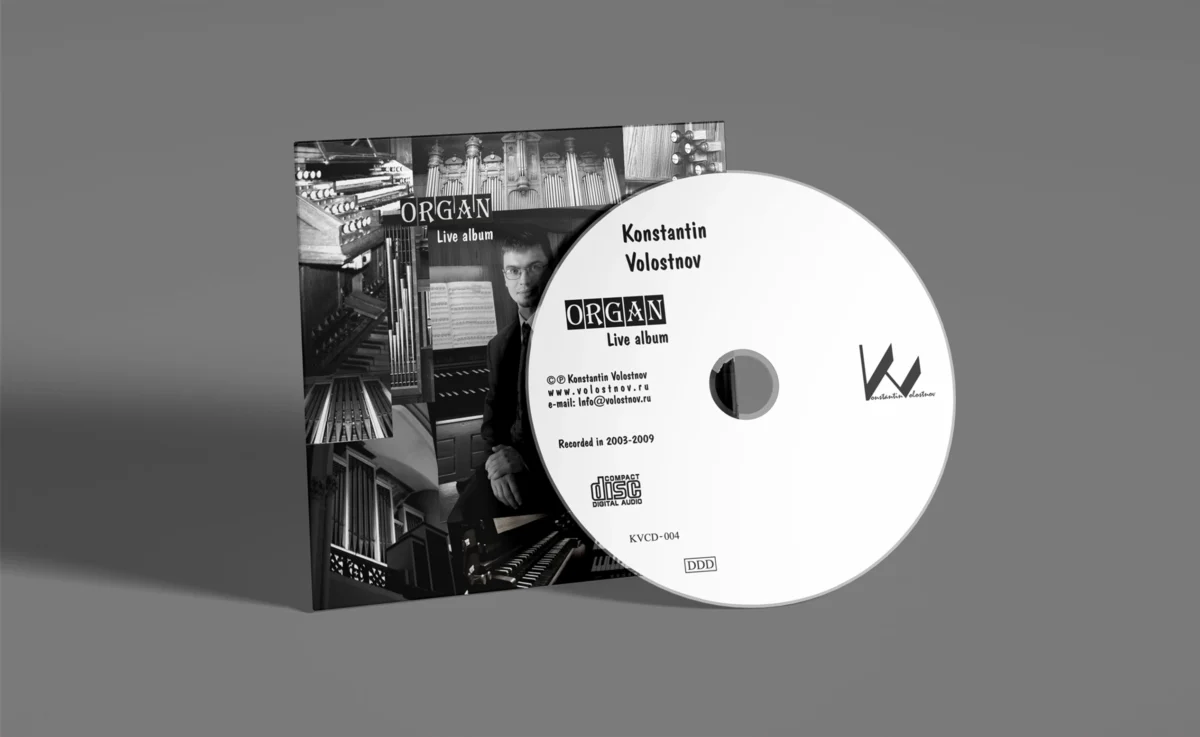
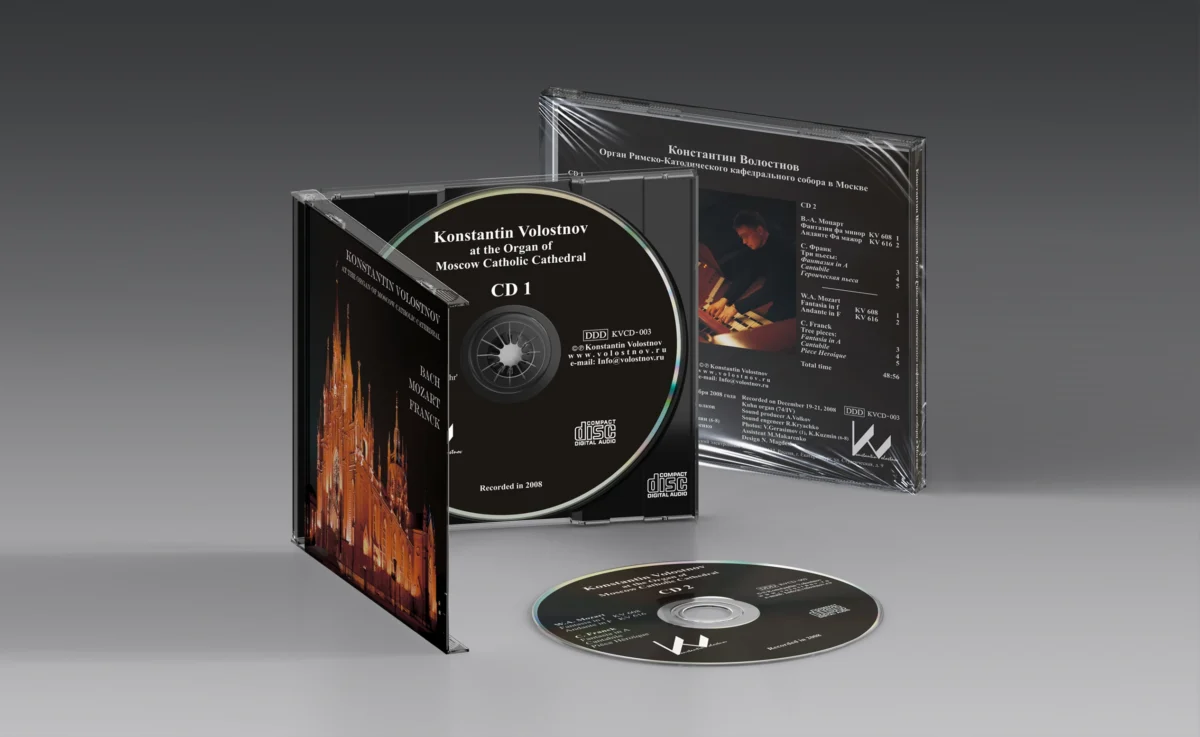
The design of the discs themselves is highly utilitarian. Black background, white text — excellent readability, placing functionality first.
Visual unity across all packaging elements (cover, discs, inlay) creates a cohesive, professionally designed identity for the release.
the PACKAGING
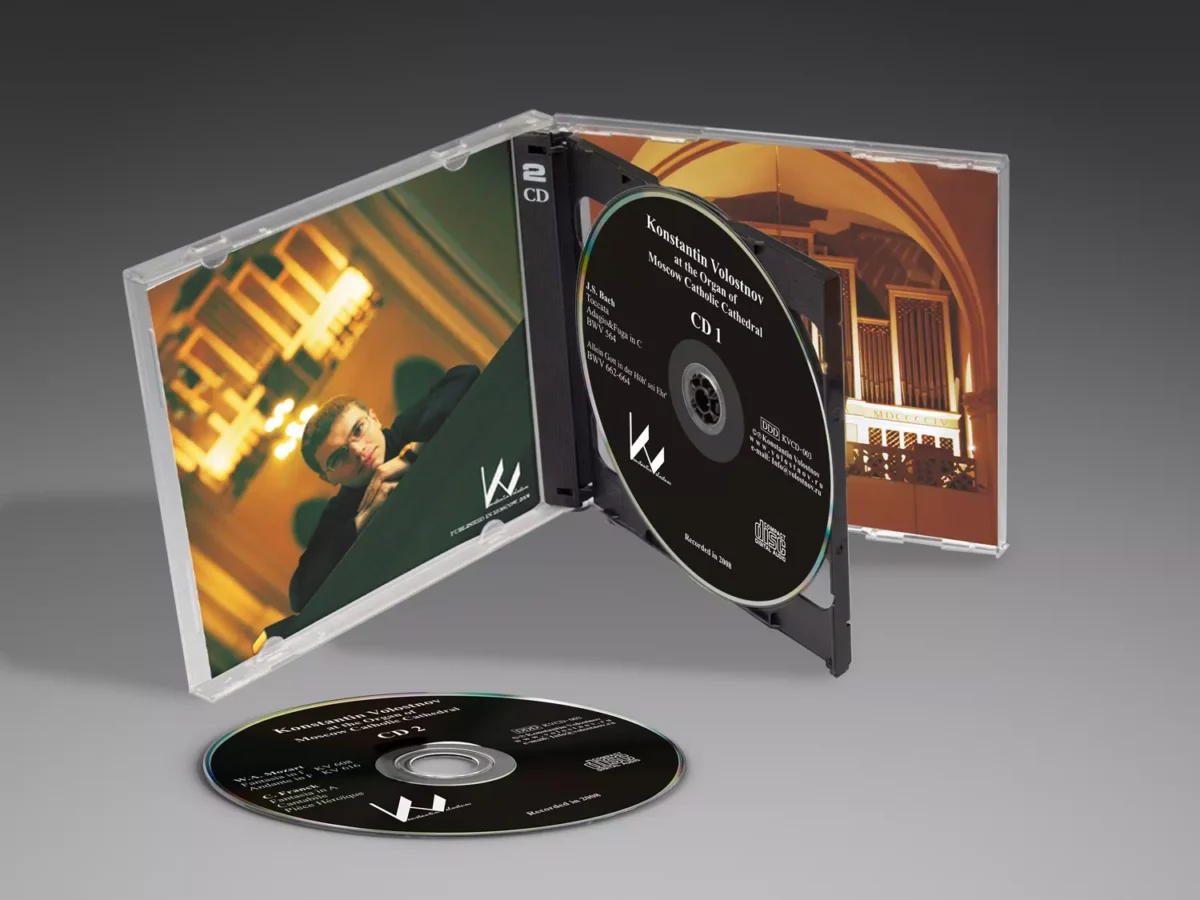
The “fatbox” killer
Previously, double albums were released in a 24 mm thick “Fatbox”. The Brilliant Box made it possible to pack two CDs in a standard 10.4 mm profile. This elegant solution kept the dimensions of the paper front booklet and rear inlay the same as those for a standard single-disc jewel case.
A hinged central tray provided access to the inner side of the paper back cover, which remained unused during the era of opaque black trays.
The package included all printing elements, featuring a multi-page booklet with information about the performer, the recording, and the musical program in two languages.